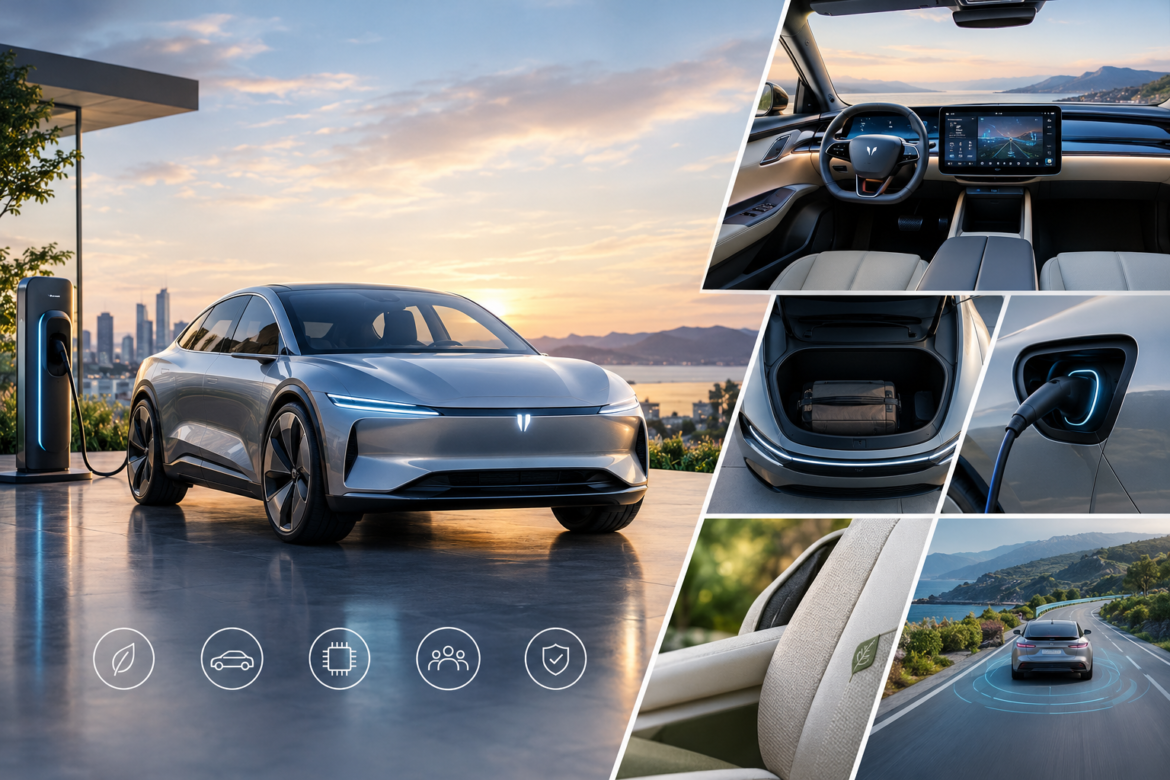
Electric vehicles are changing more than how we fuel our cars. They are changing what a car can look like, how it uses space, and what it feels like to drive or ride in one. The future of EV design will focus on clean shapes, smarter cabins, flexible interiors, and technology that makes everyday travel easier.
Because electric motors and batteries do not need the same bulky parts as gasoline engines, designers have more freedom than ever. The result is a new generation of vehicles that are efficient, comfortable, connected, and visually distinctive.
Why EV Design Is Changing
Traditional cars were built around an engine, transmission, exhaust system, and fuel tank. Electric vehicles remove many of those limitations. Batteries can sit low in the floor, electric motors are compact, and there is no need for a large front grille to cool an engine.
This shift gives designers a “skateboard” platform: a flat battery pack under the cabin, motors at the wheels, and more usable space above it. That layout allows flatter floors, roomier cabins, creative seating, and extra storage areas such as front trunks.
Efficiency also shapes EV design. A smoother, more aerodynamic body helps reduce drag, which can improve driving range. Research shows that streamlined shapes and better wind management reduce aerodynamic drag, especially at highway speeds. In fact, a 10% reduction in drag can improve EV range by around 5%, making aerodynamics one of the most important parts of EV styling.
The New Look of Electric Cars
EVs are developing a visual language of their own. Many now use smooth surfaces, flush door handles, closed-off front ends, slim lighting, and simple body lines. These design choices are not only stylish; they help air move around the vehicle more efficiently.
Cleaner, Calmer Exterior Styling
The classic large grille is slowly disappearing because electric motors need far less airflow for cooling than combustion engines. In its place, designers are using smooth front panels, illuminated logos, thin headlights, and sculpted surfaces.
This creates a cleaner, more futuristic appearance. It also reduces visual clutter, helping the car look modern without relying on aggressive vents, sharp creases, or oversized air intakes.
Aerodynamics Becomes Beautiful
In the future, aerodynamics will become even more central to EV design. Wheels, mirrors, rooflines, underbodies, and even tiny details around lights can affect how air flows around the car.
Expect to see more:
- Smooth, rounded rooflines
- Flush door handles
- Aerodynamic wheels
- Covered underbodies
- Camera-based mirror replacements
- Active air vents that open only when needed
These features may look subtle, but they can make a real difference in range. A sleeker design can improve efficiency, reduce the need for extra battery cells, and help keep vehicle weight down.
Lighting as a Design Feature
Lighting will play a bigger role in how EVs express personality. Instead of relying only on headlights and taillights, future EVs may use light strips, animated welcome sequences, and customizable signatures.
This gives brands a way to stand out while keeping the exterior simple. It also improves communication between the vehicle and people outside it, such as showing when the car is charging, unlocking, or preparing to move.
Interiors Designed Around People
The biggest changes in EV design may happen inside the cabin. With no engine tunnel and a flat battery floor, EVs can offer more open and flexible interiors than many traditional vehicles.
More Space, Less Clutter
Electric platforms free up space that used to be occupied by mechanical parts. This allows designers to create wider footwells, flatter floors, better legroom, and smarter storage.
Future EV cabins may include:
- Larger center consoles with hidden compartments
- Front trunks for extra luggage
- Underfloor storage
- Fold-flat seats
- Sliding or rotating seats
- Modular storage for work, travel, or family needs
The goal is to make the cabin feel less like a traditional car interior and more like a comfortable mobile living space.
Sustainable Materials Will Matter More
Many buyers now care not only about how a car looks, but also about how it is made. EV interiors are increasingly using recycled plastics, plant-based fabrics, vegan leather alternatives, reclaimed wood, and other lower-impact materials.
This trend will likely grow as automakers try to reduce waste and appeal to environmentally conscious customers. The challenge will be making these materials feel premium, durable, and easy to clean.
Comfort Becomes a Priority
As driving becomes more assisted and, eventually, more automated, cabins will be designed for relaxation as well as control. Seats may recline further, lighting may adjust to reduce fatigue, and climate systems may focus on individual comfort zones.
Ambient lighting, panoramic glass roofs, quiet cabins, and high-quality sound systems are already becoming important selling points in modern EVs. In the future, these features will become more personalized and responsive.
User Experience: The New Heart of Car Design
In an EV, user experience is not just about comfortable seats or a nice dashboard. It includes how easily you charge, plan trips, control settings, connect your phone, and understand the vehicle’s information.
Software is becoming a core part of the vehicle. Modern EVs increasingly rely on digital systems for navigation, climate control, entertainment, driver assistance, and over-the-air updates.
Screens Should Help, Not Distract
Large touchscreens are common in EVs, but the future will not simply be “more screens.” The best designs will make information easy to find without overwhelming the driver.
A good EV interface should:
- Show important driving information clearly
- Keep common controls within easy reach
- Use voice commands for hands-free tasks
- Allow simple customization
- Avoid burying basic functions in complicated menus
Drivers should not need to search through several menus just to adjust the temperature or defrost the windshield. The most successful EVs will balance digital convenience with simple, intuitive controls.
Voice Assistants and AI
AI-powered voice assistants are becoming more common in vehicle cabins. They can help with navigation, media, climate settings, and vehicle controls, while AI may also predict preferences for seating, lighting, and temperature.
In the future, your EV may learn your routine. For example, it could warm up the cabin before your morning commute, suggest a charging stop before a long trip, or adjust driving settings based on weather and traffic.
Personalization Will Be Standard
Future EVs will likely remember individual preferences. When you enter the car, it may automatically adjust the seat, mirror position, climate settings, music, navigation preferences, and display layout.
This is especially useful for households that share one vehicle. Instead of manually changing settings every time, each driver can have a personalized profile.
Charging Experience Will Shape Design
Charging is one of the biggest differences between EVs and gasoline cars. Future EV design will need to make charging feel simple, predictable, and stress-free.
Clear Charging Information
Drivers want to know three things: how much charge they have, how far they can go, and where they can charge next. Future interfaces will need to present this information clearly, especially during road trips.
Better trip planning tools may combine battery level, traffic, weather, terrain, charging station availability, and driving style to give more accurate range estimates.
Charging as Part of Daily Life
Home charging design will also become more important. Owners will think about garage layout, cable management, charging schedules, and how charging fits into their daily routine.
Future EVs may include smarter charging features such as:
- Scheduled charging during lower-cost hours
- Preheating or cooling the cabin while plugged in
- Battery health recommendations
- Easy-to-read charging progress displays
- Integration with home energy systems
Vehicles as Mobile Power Sources
Some EVs can already supply power to external devices through vehicle-to-load features. This turns the car into a mobile power source for camping gear, tools, appliances, or emergency backup power.
As this technology becomes more common, EV design may include clearer power outlets, better cable storage, and interfaces that show how much energy is being used.
Functionality Without Losing Style
The best future EVs will not choose between beauty and usefulness. They will combine both.
A car can look sleek while still offering practical storage. It can have a futuristic cabin while keeping essential controls easy to use. It can use advanced technology without making the driving experience confusing.
Design for Real Life
Future EVs will need to work for different lifestyles:
- Families may want flexible seating and easy child-seat access
- Commuters may prioritize range, comfort, and charging convenience
- Outdoor adventurers may need durable materials and cargo space
- City drivers may value compact size, visibility, and smart parking features
- Business users may want quiet cabins, connectivity, and productivity features
The most successful designs will make these needs feel natural rather than forcing buyers to accept compromises.
Safety and Trust
As vehicles become more digital, safety communication will become part of design. Drivers need to understand what driver-assistance systems are doing, when they are active, and when the driver needs to take control.
Clear visuals, simple alerts, and predictable controls will help build trust. A future EV should feel advanced, but never mysterious.
What Buyers Can Expect Next
The future of electric vehicle design will be defined by three big ideas: efficiency, flexibility, and experience.
Exteriors will become smoother and more aerodynamic to protect range. Interiors will become more open, sustainable, and adaptable. Technology will become more personal, helpful, and connected.
But the best EVs will not win simply because they have the biggest screen or the most futuristic shape. They will win because they make daily life easier: charging without stress, driving without distraction, traveling comfortably, and using space wisely.
Electric vehicle design is moving toward a future where cars are not just transportation. They are smart, comfortable, efficient spaces designed around the people inside them.